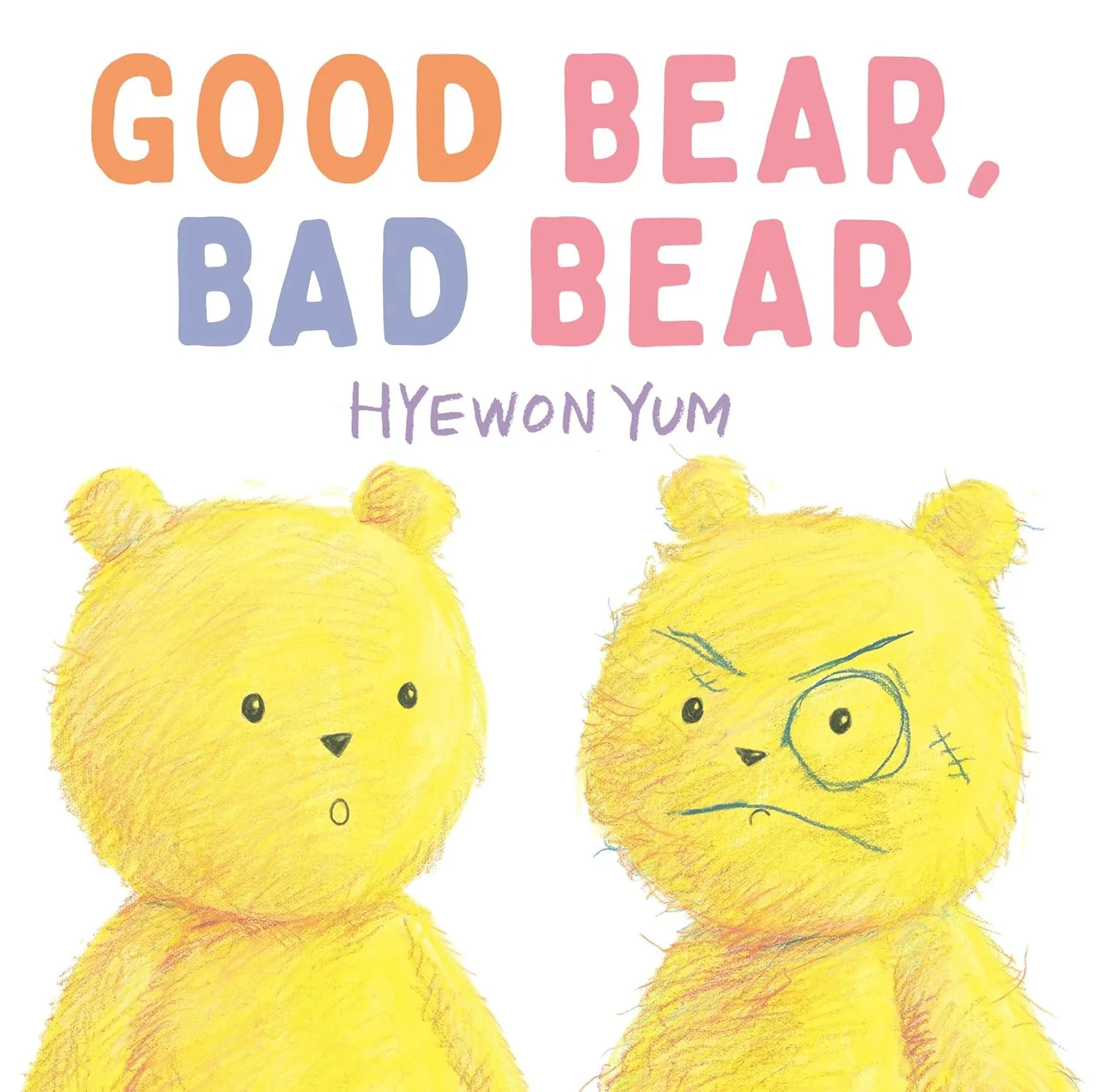
Good Bear, Bad Bear
Written and Illustrated by Hyewon Yum
★"Subtext: Sometimes kids can solve their own problems. . . . Although there’s no adult perspective to decode the sisters’ psychology for readers, they’ll totally get it: When the narrator’s sister says that “Bad Bear is funny, brave, and interesting,” she’s reminding her sib of her positive attributes, and the sisters soon make peace. In Yum’s mixed-media art, featuring invitingly plain-as-day colored-pencil shadings, the sisters, who appear to be of East Asian descent, resemble their personalities. . . . [with] a wonderful wordless closer. . . . A funny, feelings-front tale with a light touch." —Kirkus Reviews, Starred Review
★"Emotionally astute. . . . Rendered with colored pencil, crayon, and watercolor, the empathetic and observant artwork deals in round-cheeked figures and buttery yellows, letting self-recrimination sting without tipping visually into gloom. . . . Moving from certitude into subtlety, it’s a wise celebration of the multifaceted self." —Publishers Weekly, Starred Review
★"Spread-length illustrations hilariously capture . . . contrasting play. Well-paced for comic effect, this is a great read-aloud. Yum’s distinctive crayon, colored pencil, and watercolor illustrations lend a childlike perspective and feature well-chosen details. Eventually, the sisters . . . agree to be “neither good nor bad. We are just us.” The book ends with a playful, wordless twist that deliciously underscores this point. A well-crafted tale that respects the emotional intelligence of children." —School Library Journal, Starred Review
"Yum’s colored-pencil, watercolor, and crayon illustrations depict a lively and loving household, despite the sibling (and bear) rivalry. A social-emotional standout for discussions around self-acceptance and all-or-nothing thinking." —The Horn Book
"Colored-pencil, crayon, and watercolor illustrations complement this thoughtful exploration of labels, sibling comparison, and the ways expectations can shape behavior. The story’s strongest message is its rejection of simple good-and-bad categories: people can make mistakes, behave imperfectly, and still be worthy of care. A warm, accessible choice for conversations about self-perception, empathy, and emotional growth." —Booklist